


Health and safety
We're committed to ensuring we can mitigate risks and deliver our programme objectives, while protecting our people and the environment.
At OSPRI, we're dedicated to protecting the health, safety and wellbeing of our people and those affected by our business activities. That includes caring about our people, our partners, and the communities in which we operate.
- Our vision is that our work is done safely and efficiently.
- Our aim is that every worker goes home safe, healthy, and well every day.
- Our immediate priority is to eliminate the potential for serious injury, illness, or death.
OSPRI health, safety and wellbeing policy
PDF 276 KB
OSPRI health and safety ISO certificate
PDF 1.1 MB
Critical risk programme
The critical risk programme covers a broad range of activities that have the potential to seriously hurt or kill our people, our contractors or others who may be affected by our work. It focuses on the 9 highest risks in our work. For each, we’ve defined the critical controls to keep people safe, and created practical tools to action them effectively.
It’s designed for everyone across OSPRI, because managing risk is everyone’s responsibility.
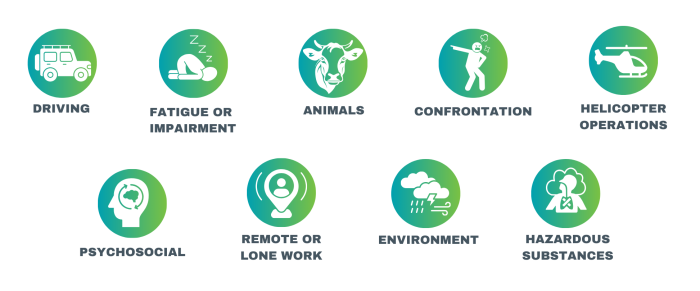
- 1 Driving — Covers any OSPRI work involving vehicles, whether it’s regular trips, long-distance travel, off-road, 4x4, or remote rural driving.
- 2 Fatigue or impairment — Mental and/or physical exhaustion that impairs a person’s alertness and ability to perform work safely. Elevated risk when carrying out work involving any other critical risk.
- 3 Animals — The potential for serious harm that can occur from working directly with, or in proximity to large live animals.
- 4 Confrontation — Interaction with farmers, the public or other industry personnel, face-to-face or on the phone, that may turn aggressive or angry. This could include farm visits, protests, or difficult conversations.
- 5 Helicopter operations — Working with or around helicopters for aerial operations, transport, or surveys.
- 6 Psychosocial — Factors at work that may cause psychological and physical harm. Arising from how work is designed, social factors, the work environment — for example, harassment, bullying, work pressures, stress, burnout.
- 7 Remote or loan work — Working where emergency services or help could be delayed. Lone work is being isolated from the assistance of other people because of location, time or the nature of the work.
- 8 Environment — Exposure to natural hazards, extreme weather, or unsafe terrain. Includes application of toxins, working outdoors, and any natural disaster or event — for example, earthquakes, fires, floods, tsunamis.
- 9 Hazardous substances — Handling chemicals, toxins, or biological materials — risk of spills, exposure, or contamination.