


Otago TB focus area
Current infected herds
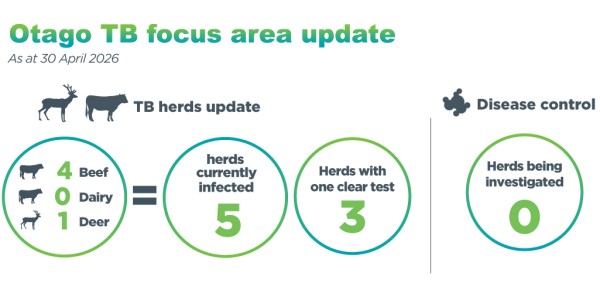
For infected status herds to return to a clear status, 2 clear whole herd tests are required, no less than 6 months apart. These tests may include an additional blood test for part or all of the herd.
Our goal is to eradicate TB in wildlife by 2040. To achieve this, we must continue targeted possum control and wildlife surveillance in the surrounding areas.
Background of TB in Otago
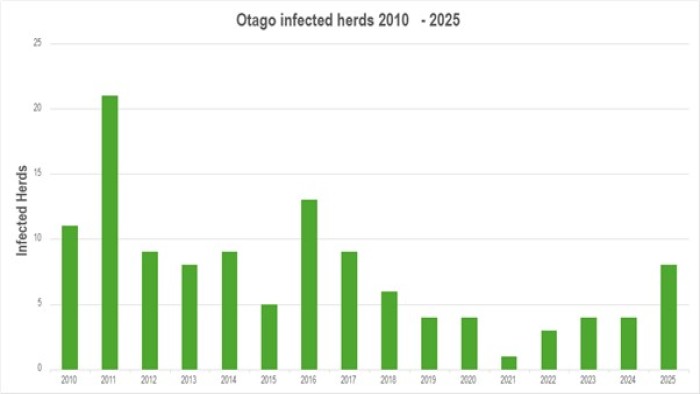
Possums have been found living and breeding in tough environments like high altitudes and tussock grasslands in Otago, which challenges what we thought we knew about their typical habitat. The vast and rugged terrain presents unique difficulties in TB control.
To help eradicate TB from New Zealand, we've implemented a framework of TB Management Areas (TMAs) around the country. TMAs are areas with known TB infection in livestock and wildlife.
Each TMA has its own plan based on the local landscape and risk. In Otago, the TMAs cover a range of landscapes from farmland, bush, forestry, and high-country areas.
These areas are diverse and require different control approaches.
We have met TB control goals in:
- Dunedin
- East Otago
- Mount Hyde
- Outram Maungatua
Ground-based possum control has been ongoing for several years. To increase impact, aerial 1080 may be considered for large-scale control.
TB Testing - Otago Movement Control Area
At the start of October 2025, a new Movement Control Area (MCA) was established in Otago. In MCAs, all cattle or deer on a farm are tested annually. Cattle over 3 months and deer over 8 months of age must have a TB test before they move within an MCA.
Movements must be completed within 60 days of the pre-movement test. Stock going direct to slaughter do not require a pre-movement test.
We realise this may affect your plans for your herd and your business and we want to reassure you that increasing the movement control area is a precautionary measure to limit the potential spread of infection in Otago, and to other parts of the country.
Checklist for farms within an MCA
- Cattle and deer over 3 months of age must have a clear TB test within 60 days before moving off your farm.
- Cattle and deer moving direct to slaughter do not need to be TB tested.
- Animals moving within the MCA to a piece of land you lawfully occupy do not need a pre-movement test unless there’s a different herd with a different herd number on the destination property already.
- If you intend to move or sell your animals, you need to book a pre-movement test for them first. You need book this test at least 14 days before you move the animals. You can book a pre-movement test online, or by calling our Support Centre on 0800 482 463.
Annual on-farm testing
We have an annual TB testing programme already in place for the Otago area. You don't need to book a test with us, we’ll contact you to organise testing.
If your herd does receive a positive blood test, we’re here to help. Our case management team can talk you through the next steps.
Pest control programme
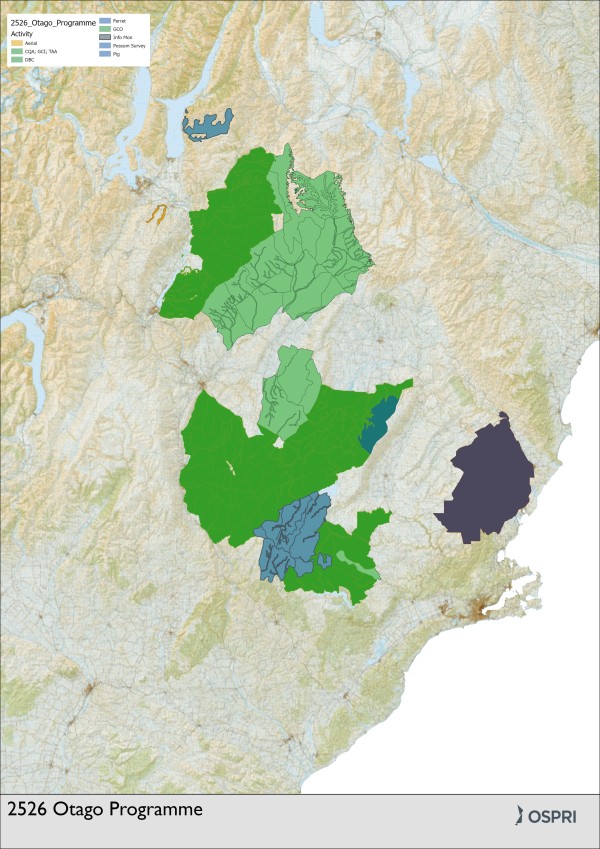
We have a programme of pest control operations and wildlife surveillance in place for Otago. We publish notices for each region that describe:
- any possum control or wildlife survey work we have planned for the coming year
- a forward view of further work that will be needed to eradicate TB in the area.
At a glance for 2025/2026:
- Aerial 1477 hectares
- Ground Control 516,052 hectares
- Wildlife surveys 70,370 hectares.
Supporting farmers
The health, wellbeing and welfare of farmers is our top priority. We’re working with Otago farmers who have infected herds to implement farm-specific TB management plans, with the aim of returning each herd to TB-free status as soon as possible.
If you're dealing with a TB outbreak in your herd or community, you can get help and advice from us, and a number of other organisations around the country.
Hunting in the Otago Area
Hunters should stay alert for signs of TB in wildlife and take steps to stay safe.
Bovine TB can infect humans. While the risk is small, you could get TB when handling or cutting up infected wild pigs or deer. To lower your risk:
- use disposable thin rubber gloves when cutting up animals
- wash your hands well (ideally with a disinfectant) before eating or drinking
- wash your bloodstained hunting clothes and gear separately to other clothes
- clean your knife often, particularly when moving from skinning and gutting the animal to butchering it.
If you think you've been exposed to TB, contact your doctor or medical practitioner.
Dogs can also get infected with TB. We don’t recommend feeding raw pig heads or other offal to your dogs.
Hunting is not restricted by OSPRI’s TBfree programme, except during aerial 1080 operations.
During operations, warning signs are placed at main access points to aerial control areas. All land users, including hunters, must follow these safety instructions.
Each aerial operation has a TB control notice with details to help keep people safe.
For hunting permits and access information, contact your local DOC office and private landowners.